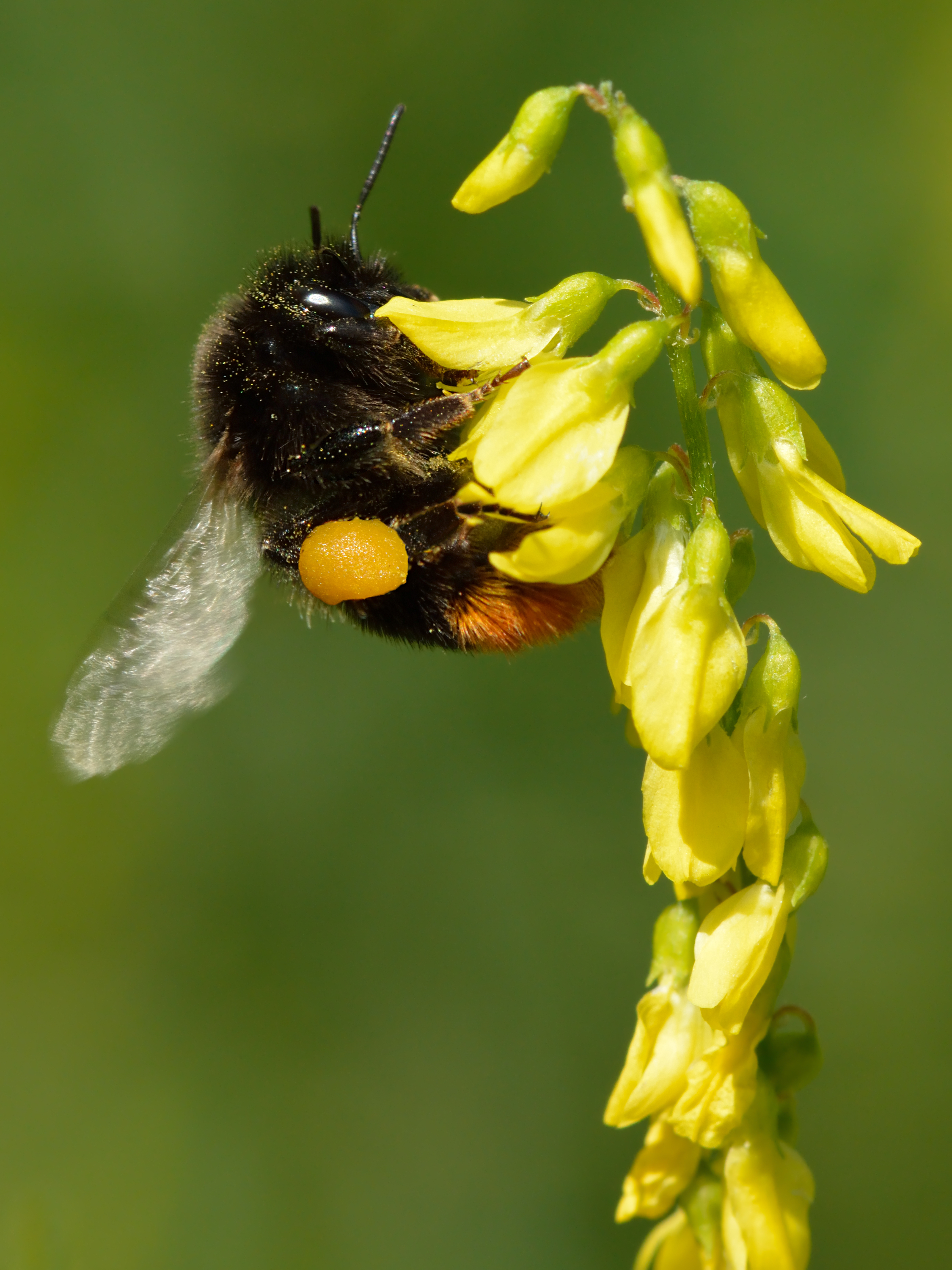
Bumblebees Show 'Emotion-Like Behaviors,' New Research Indicates
Recent scientific inquiry has revealed that bumblebees exhibit certain 'emotion-like behaviors,' a finding that marks a significant development in the study of animal cognition and sentience. According to an RSS Wire report, these behaviors were previously observed exclusively in mammals, suggesting a potential broadening of the understanding of emotional capacities across the animal kingdom.
The research, detailed by its proponents, moves the scientific community a step closer to determining whether insects, specifically bumblebees, possess internal states akin to emotions. This development could challenge long-held assumptions about the complexity of invertebrate minds and their capacity for subjective experiences.
Implications for Sentience and Animal Welfare
The observation of 'emotion-like behaviors' in bumblebees carries substantial implications for how sentience is defined and understood. For decades, the presence of complex emotional states has largely been attributed to vertebrates, particularly mammals, due to their more intricate neurological structures. The new findings, however, suggest that the criteria for identifying such states may need to be re-evaluated.
Researchers involved in the study emphasized that these behaviors, while not definitively proving the existence of emotions in the human sense, do indicate a level of internal processing that warrants further investigation. The behaviors observed in bumblebees are described as analogous to responses seen in mammals under similar experimental conditions, prompting the 'emotion-like' classification.
This research could also influence future discussions surrounding animal welfare. If insects are found to possess capacities for 'emotion-like behaviors,' it could lead to a re-examination of ethical considerations and protection standards for invertebrates. Currently, animal welfare laws and guidelines predominantly focus on vertebrates, with invertebrates often receiving less consideration due to the prevailing belief that they lack the capacity for suffering or complex emotional experiences.
Advancing the Study of Invertebrate Cognition
The study contributes to a growing body of research dedicated to understanding the cognitive abilities of insects. Historically, insect behavior has often been interpreted through the lens of instinct and simple stimulus-response mechanisms. However, recent studies have begun to uncover surprising levels of complexity in insect learning, memory, and decision-making.
The identification of 'emotion-like behaviors' in bumblebees adds another layer to this complexity, suggesting that their internal worlds may be more nuanced than previously imagined. This could open new avenues for research into insect neurobiology, ethology, and comparative psychology, potentially leading to a more holistic understanding of consciousness and subjective experience across diverse life forms.
While the research does not definitively conclude that bumblebees 'have feelings' in the human sense, it provides compelling evidence for behaviors that mirror emotional responses in more complex organisms. This distinction is crucial, as scientists typically differentiate between observable behaviors that resemble emotions and the subjective, internal experience of an emotion. Nevertheless, the findings represent a significant stride in bridging the gap in understanding between vertebrate and invertebrate psychology.
The scientific community will likely continue to scrutinize these findings, with further research needed to replicate and expand upon the observations. The implications, however, are clear: the study of bumblebees may be on the cusp of fundamentally altering how humanity perceives the emotional and cognitive landscapes of the natural world.